Where should you look for the shine?
Holo is short for holographic: the foil catches the light as you move the card. Start with a card that has its Pokémon picture in a rectangular window. Hold it by the edges, use one light, and tilt it slowly so you can see which area changes.
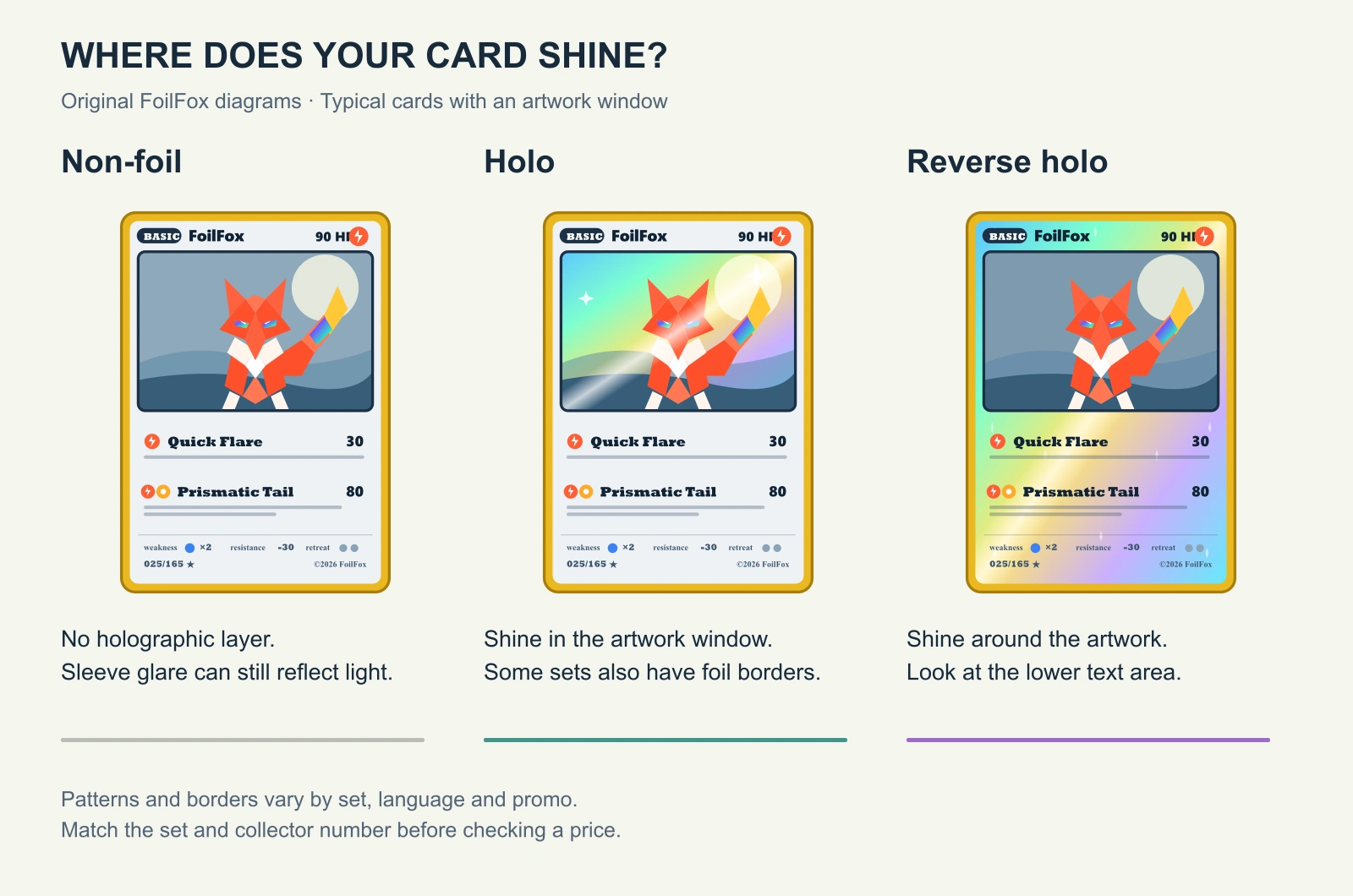
A holo usually shines in that picture window. A reverse holo has foil around the picture, including the lower area with the attacks. Some sets also have shiny borders, so inspect the picture and the text area instead of relying on the edge alone.
The drawings below show those areas. Your card’s pattern may look different, and full-art cards, where the illustration spreads across the face, need their own comparison in the illustrated finish guide.
What does a reverse holo look like on a Pokémon card?
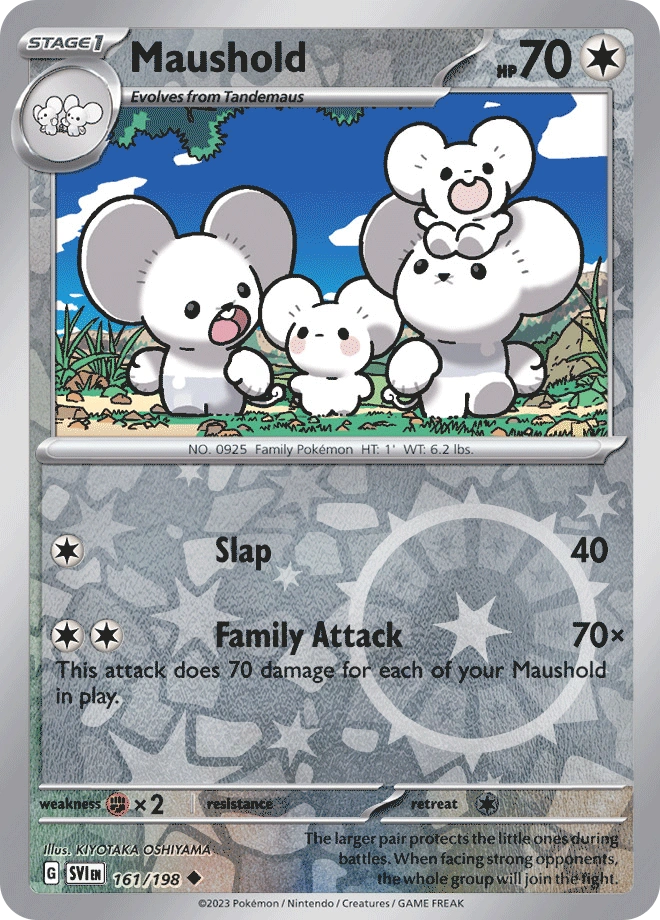
Maushold is a family of little mice, and this card gives us a useful example of the area to inspect. In Pokémon’s explanation of Scarlet & Violet card design, the publisher calls this treatment “parallel foil,” the term you may also see when shopping for a reverse holo.
Look below the picture at the patterned area behind Slap and Family Attack. The publisher also explains that Scarlet & Violet parallel-foil cards switch the little expansion-code box at the bottom from black to white. On this example, that is the box marked SVI beside the collector number.
Does a reverse holo cost more than a holo?
Neither label tells you the price by itself. Look up the same set, collector number, language and finish, then compare condition. A listing for another set or a different foil version can send you to the wrong price even when the Pokémon’s name matches.
The collector number is usually near the bottom of the card. It is the number that identifies the card within its set, often written as a pair such as 161/198. The same number can appear on more than one foil version, so keep the finish beside it in your notes.
You can explore Pokémon card prices by set after checking those details. Read the source and date alongside a quote, and compare ungraded cards with ungraded cards; a professionally graded card in a sealed holder has its own market.
Could a shiny sleeve be fooling you?
A sleeve can reflect the lamp even when the card inside has no foil. If you can handle the card safely, inspect it outside the sleeve while holding the edges. Plain white glare moving over the whole surface is a reason to look more closely, rather than a reason to call it holo.
If you see a ball pattern or texture on the surface, move on to the Poké Ball and Master Ball comparisons. Those details can separate versions that share a name and number. A digital picture may leave the surface treatment unclear, so ask for a tilted photo when a listing does not show it.
Save a checklist for your next stack of cards
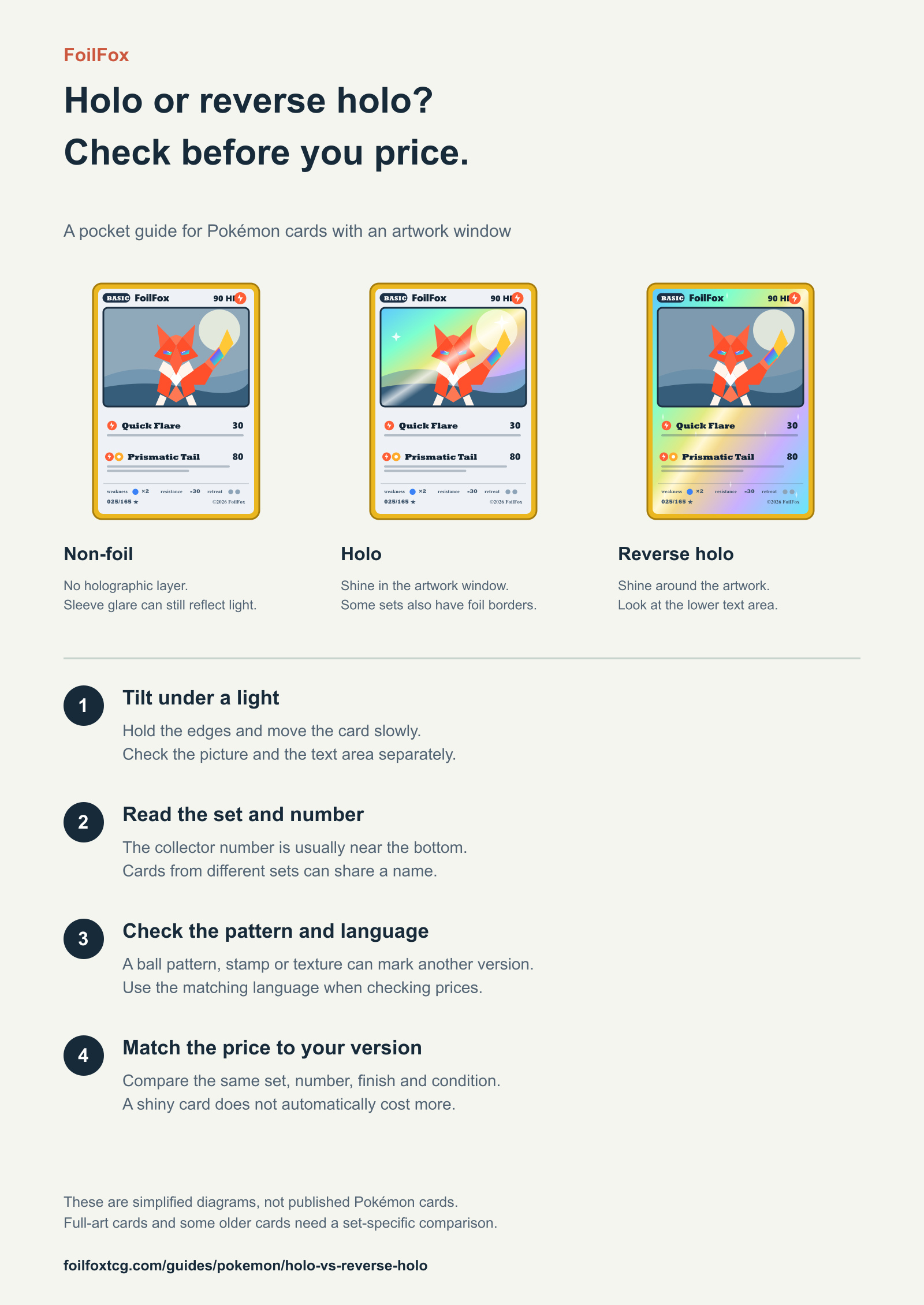
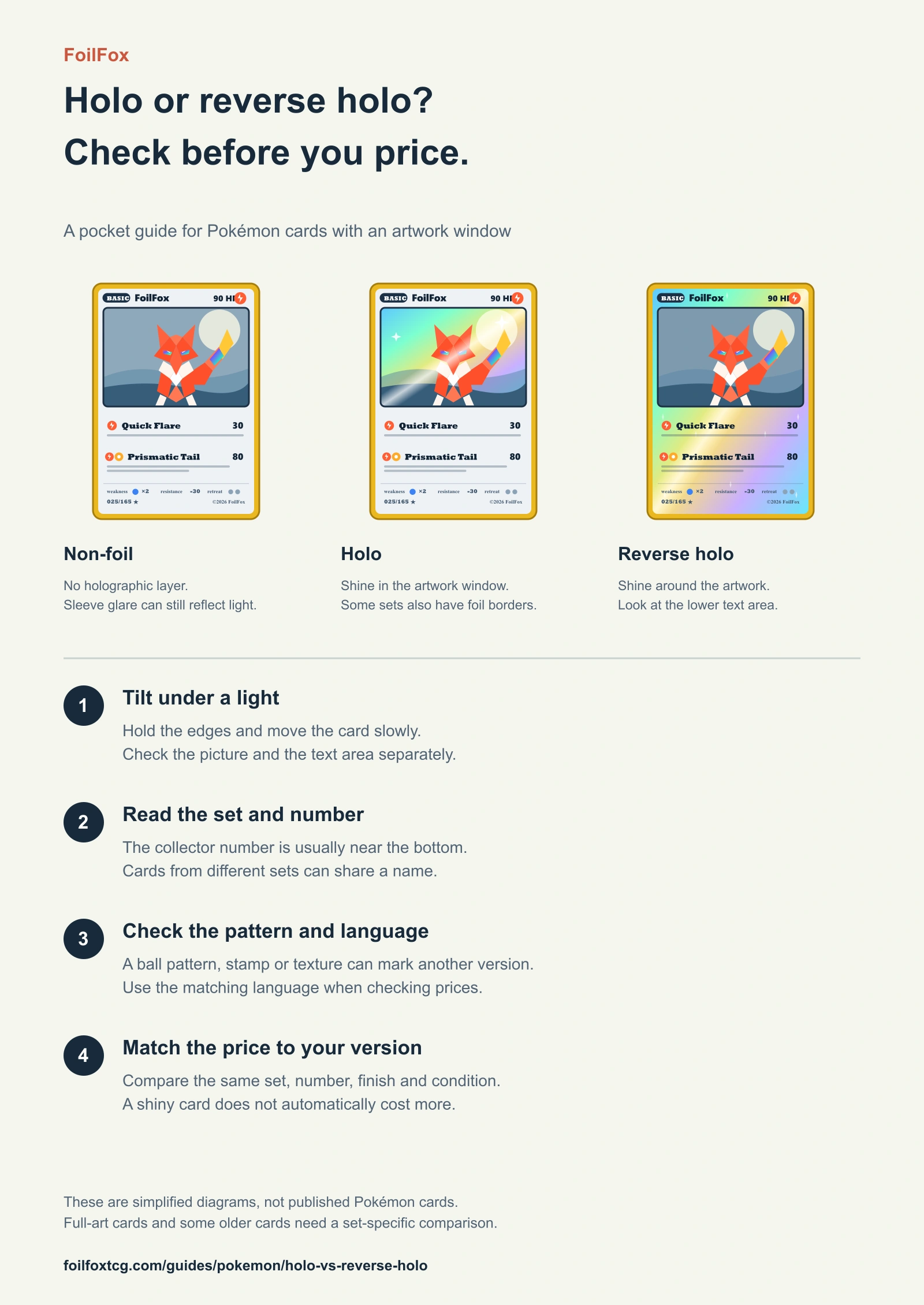
Keep this beside the binder while you sort: check where it shines, read the set and number, check the pattern and language, then match the price to the version. Save the full-size checklist to your phone or print it for the table. It may save a small argument with a very shiny sleeve.